
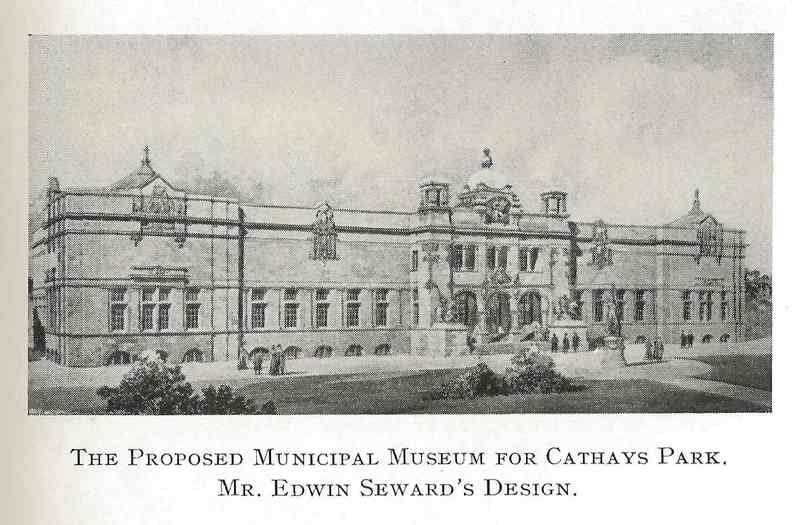
Occasionally an architectural style can be so dominant in a city that it becomes a kind of local vernacular. Bath is given its identity by the Regency Neoclassical, Bristol has its own variation on the Byzantine, Oxford is high-gothic and Coventry is mid-century modern. York is known by its warren of medieval streets and Aberdeen has its own particular granite solidity. Amongst all these, Cardiff, capital of Wales, must be the city of mongrel architecture, an architecture of eclecticism that takes from all styles and sources to make something utterly original, and it would seem this can be traced back to one man, Edwin Seward.
Edwin Seward: The Man Who Built Cardiff
 Morgan Haigh