
There are few places within the M25 where something approaching a rural idyll can be found. One such place is Petersham, a hamlet in the water meadows to the south of Richmond. It’s a mixture of vernacular architecture, roads designed for feet and hooves, and birdsong filled hedgerows. Another such place is Hampstead Garden Suburb, but whereas Petersham is the result of the accidents of history HGS is contrived – picturesque to order.
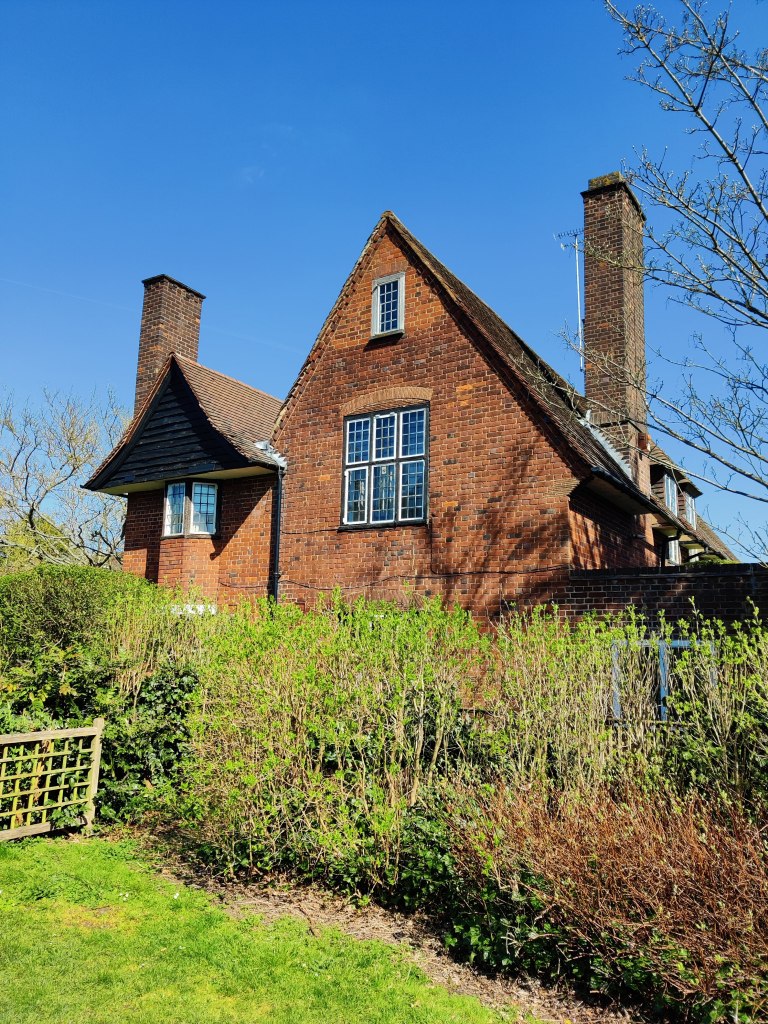
Conceived in 1906 by the philanthropist Henrietta Barnett, erstwhile founder of the Whitechapel Gallery, the suburb was developed around the time of the garden city movement, that turn of the century project to cure the ills of urban living by starting anew in the sunlit uplands of the home counties that orbit London. The first of these was Letchworth in Hertfordshire, derived from the do-gooder writings of Ebenezer Howard it rather failed in its social aims of creating a liveable and morally improving alternative to city life. Its often esoteric first inhabitants simply commuted daily from the ‘Heaven near Hitchin’ into the metropolis thus, along with the town’s intentional lack of pub, killing any social life independent of London that might have flourished there.
Where Barnett’s scheme differed was its understanding of the relationship of the suburb and the ‘urb. By purchasing 243 acres just north of Hampstead proper, near the existing Golders Green area, Barnett’s new town would be symbiotic with the city whilst preserving a more country-living ambience. Arcadia within reach of the tube.
If one approaches the suburb as I did, from the Spaniard’s Inn on Hampstead Hill, down through the wooded Heath Extension and out into the playing fields beyond, the effect is reminiscent of the view of Oxford from the Christ Church Meadow, the city laid out before you as if in a seventeenth-century engraving, the principal figures of the skyline exaggerated for recognition. It is the peculiar spire of St Jude’s church that identifies the HGS from afar and below it, the houses huddle unobtrusively. The church, along with its non-conformist sibling, and much of the best design to be found in the suburb are the invention of its foremost creative mind, Edwin Lutyens.
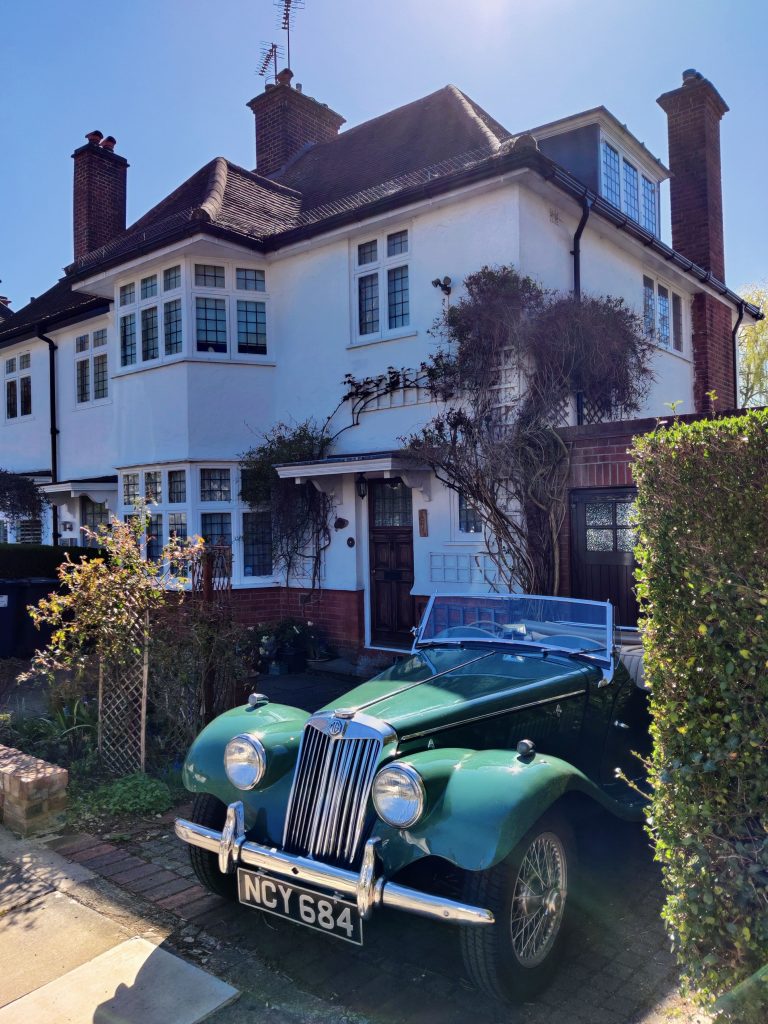
It is through Lutyens’ vision that HGS avoids the sickly-quaintness and ersatz olde-worlde-ness of which many a planned community of that age was guilty. The homes, most of which are detached and with plentiful gardens at both front and back, belong to some imagined Tudorbean-Georgian-arts-and-crafts era and could be dated anywhere between 1560-1930. However, it is exactly this imaged vernacular that prevents the scheme from falling into Disneyland parody, theme-park England. They are not copies of cottages from double-barrelled villages in unpronounceable valleys or synthetically aged, imitation, live-in follies, but rather a varied and exciting mixture of original architecture derived from, and inspired by, the long history of building in these islands. A wander around the streets of this area is made all the more enjoyable by their variation, something many more modern housing developments seem to have abandoned in favour of row after row of carbon-copy, flat-facade living boxes. At HGS your house is unlike that of your neighbours and often unique on your street, yet the overall whole of the scheme is not diluted by this, whilst the forms may differ they spiritually are all of one mind.
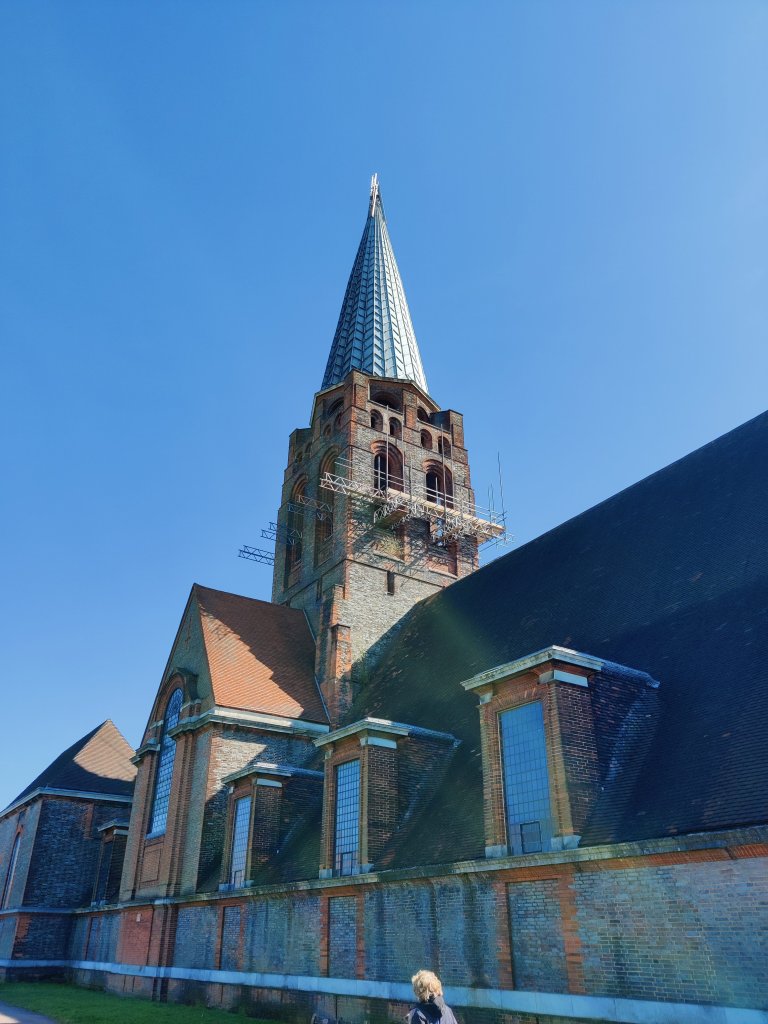
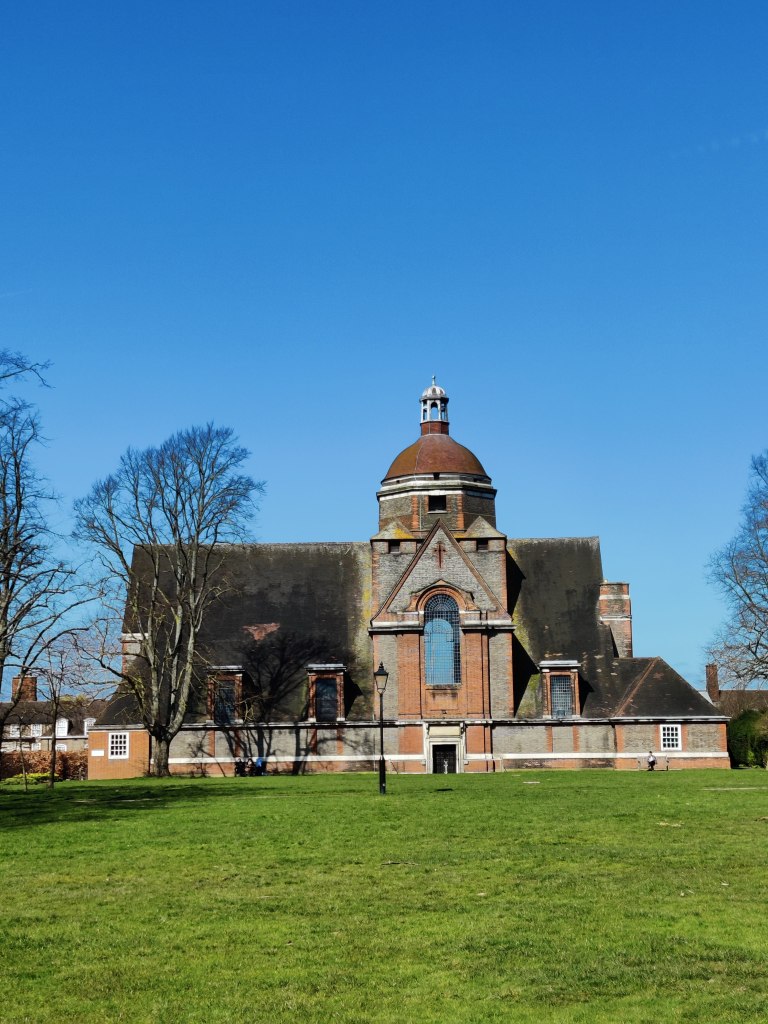
As if just to remind you that you are in the heart of a modernist project, the almost space-age (in a more HG Wells than Elon Musk way) spire of St Jude’s establishes a dissonance with the cosy cottage-core that the rest of the suburb hovers on the boundaries of. St Jude’s occupies one side of the central square, laid out and populated by Lutyens, whilst the other side holds the Free Church, of the two the more consummate design. Lutyens had always wanted to design churches but they are not common in his oeuvre, here are two that leave little doubt that we are the poorer for their scarcity. The Free Church is the smaller of the two and as such holds together best, its shallow dome and deep eves with attic windows, along with the textures and hues of its bricks and terracotta tiles give it an appearance of a Dutch church of the seventeenth century. The interior owes a debt to Wren’s City churches; simple geometry of circles and rectangles, free-standing columns in the nave and a sense of airy lightness despite relatively limited fenestration.
HGS was designed to work with the city and thus there was no attempt to make the complex self sufficient. Despite its beautiful central square being the heart of the community, you will find no pubs or shops, doctors surgeries or cinemas here. The nearby Finchley Road, at the edge of the area, is the commercial go-to for residents, but this too is not without Lutyens’ hand. Possibly the finest row of shops and flats in North London line one side of the road, Lutyens’ mixed vernacular here adopts hybrids of Swiss chalets, William Morris’ Red House, and half-timbered airs of Stratford-upon-Avon. Redbrick, dark wood beams and limestone dressings humanise the busy main road and, despite the scale of the buildings (much larger than most of the surrounding suburb), they do not dominate the pedestrian or driver. Sections of arched pavement arcade at the foot of each gable seamlessly integrate the ranges into the townscape and make an attractive concession to the passer-by or window-shopper.
Even today, there are few more appealing and humane neighbourhoods in outer London than HGS. It has all the advantages of the Garden City ideal but achieved with better taste and without the cloying, utopianist moralising of Howard’s vision. It concedes that people will always need and want cities and that to run away to the home counties in an attempt to ignore London’s draw will inevitably result in communities torn by conflicting forces, the city and the country. Rather than HGS being a spin-off of Howard’s garden cites, it is in fact the forerunner and starting point of what would go on to become the Metroland effect and in turn, for good or evil, the modern planned suburban housing development.
Enjoyed this article? Why not buy me a coffee to fuel more? Click here: https://ko-fi.com/morganhaigh

 Morgan Haigh