The National Gallery has been part of my life for a long time now, from the excitement of boyhood day trips up to London with my father to the hours spent in each room as a student, those grand halls on Trafalgar Square have been a reassuring constant all my life. But, when the Coronavirus outbreak arrived and the lamps went out in cultural institutions all over Europe, it was only a matter of time before Britain’s artistic treasure trove was locked away.
The National Gallery’s closure was set for the 19th of March, giving a day’s notice and allowing me to make one last trip before the lockdown began in earnest.
Despite the official Government mandated quarantine being still a few days away, London that morning was uncannily quiet. My empty Bakerloo Line carriage rattled me down to Charing Cross in complete solitude and I became one of only a handful keeping Nelson company as I ascended alone those broad steps that lead up to the gallery’s portico.
I have never known the gallery quieter, inhabited as it was by only a few of the faithful, making their pilgrimage that chilly morning to bid a fond farewell to oil and tempera friends.
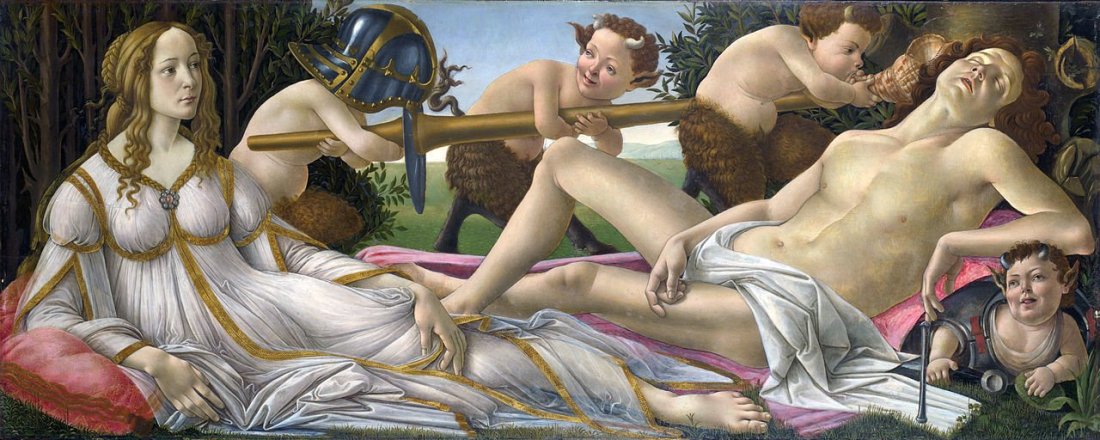
Despite the inevitable melancholy of the circumstances, I found it an exciting opportunity to be entirely alone with some of the great European masterpieces. There I stood, the third point of a love triangle between Botticelli’s Venus and Mars, a solitary worshipper at the feet of Masaccio’s Madonna, and conducting my private devotions before that glorious jewel of the high gothic, the Wilton Diptych.
One of the works that still mustered a small crowd was Jan van Eyck’s Arnolfini Portrait, little did that small congregation realise that soon they too would be living an interminable indoor existence just like van Eyck’s couple.
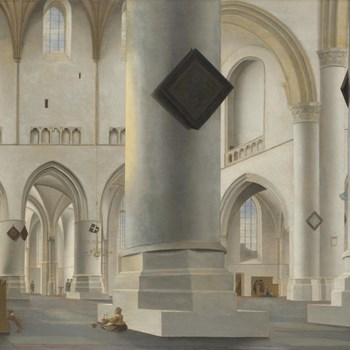
Baroque scenes of passion and ecstasy hung in silent corridors and familiar strangers peers out from Dutch Golden Age Frames. One had the feeling of the socially distanced figures in Saenredam’s sparsely populated Netherlandish church interiors as I strolled through room after room of lonely art-celebrities.
The Rokeby Venus conducted her toilet in privacy unknown to her for years and Caravaggio’s apostles had no one with whom to share their great revelation over that supper at Emmaus. Canaletto’s static cityscapes of Venice took on an eerily portentous tone, reflecting an empty St Mark’s Square at what should have been peak carnival time.
Whilst standing alone in a room with no-one for company other than Holbein’s Ambassadors is certainly a special experience, the one artist who made the greatest impression on me that day came as a surprise. I have been less than complimentary about Vincent van Gogh in the past. Whilst it cannot be denied he is a wonderful artist, I never felt the feature-film, T-shirt emblazoning, international hype that surrounds him was quite deserved. That morning in the National Gallery proved me wrong.
I have never been able to get within ten feet of their excellent collection of van Goghs for the permanent wall of phone wielding tourists that rises before them as soon as doors open every day. But on that day, on the eve of the end of the world as we knew it, I stood almost entirely alone with those canvases that seemed to glow from within with raw colour.
He did not, as many rather trite critics like to pretend, see the world any differently to the rest of us, quite the opposite in fact. He saw the world exactly how we all see it only he really, truly, looked. He did not, as many artists do, see the world as an image to be converted into paint, but rather understood the paint as the medium through which the world, in its every changing joy and sorrow, light and colour, should pass. That is what one has to do to truly appreciate van Gogh, really, truly look and spend time close to his works, something that the impenetrable hype often makes impossible.

Whilst this virus is an abominable thing that has already taken so much from us, both permanently and temporarily, I am nonetheless grateful that it afforded me that wondrous and uncanny morning in the National Gallery, our National Gallery, in order to know old friends anew before they departed from our lives.
Hurry back.

 Morgan Haigh